Blog
"Oxidative Stress" and "Neurotransmitters": What Memodyne's Brain Claims Mean
They are names for normal body processes: cell wear from unstable oxygen molecules, the chemical messengers between nerve cells, and the blood supply to the brain. The Memodyne sales page says its formula helps these. No published study of the formula measured any of them, and its amino acids were studied mainly for exercise, at far higher doses (NIH ODS, Exercise supplements).
Written by the Memodyne editorial teamUpdated · 8 min read
The question
Why do memory supplement pages use words like oxidative stress?
Because they name real biology and sound precise. Yet naming a process says nothing about whether a capsule changes it.
The Memodyne sales page leans on these terms. Its bullets promise to "Protect the brain from oxidative stress", "Boost neural communication" and "Optimize neurotransmitter production". It also says the ingredients "increase cerebral blood flow". Those are the seller's words, not study results.
Plain definitions
What do oxidative stress, neurotransmitters and cerebral blood flow mean?
All four are everyday processes in a healthy body.
Oxidative stress
Cells burn fuel with oxygen and give off unstable molecules called free radicals. Antioxidant defenses mop most of them up. When radicals outrun those defenses, they can harm fats, proteins and DNA.
Neurotransmitters
Chemicals one nerve cell releases to pass a signal to the next. Dopamine, serotonin and acetylcholine are examples. The body builds them from food and keeps their levels in tight balance.
Neural communication
The full relay: an electrical pulse runs along a nerve cell, then neurotransmitters carry the message across a tiny gap called a synapse.
Cerebral blood flow
The blood reaching the brain with oxygen and glucose. Vessels widen and narrow to hold that supply steady whether you stand, rest or exercise.
None of our sources show Memodyne's ingredients shifting any of these four processes in people.
Claim check
What do the Memodyne sales-page claims say, and what do sources show?
Each claim points at one of the processes above.
| Sales-page wording | Plain meaning | What our sources show |
|---|---|---|
| "Protect the brain from oxidative stress" | Less cell wear from free radicals | No human result for arginine, citrulline or beta-alanine |
| "Boost neural communication" | Stronger nerve signaling | Not measured for any of the seven lines |
| "Optimize neurotransmitter production" | More messenger chemicals | Not measured; the body sets these levels itself |
| "Increase cerebral blood flow" | More blood reaching the brain | Even 2-20 g of arginine a day usually did not move nitric oxide or circulation in athletes (NIH ODS, Exercise supplements) |
The nitric oxide reasoning behind that last claim is laid out on how Memodyne is meant to work.
The rules
What is the difference between a structure-function claim and a disease claim?
A structure-function claim says a product supports a normal body process. A disease claim ties a product to an illness, and supplements may not promise to treat or cure one.
Structure-function
Wording such as "Cognitive Support Formula". It must sit beside the FDA statement, and the agency does not okay supplements before sale (FDA, Supplement Q&A).
Disease claim
Any promise to treat, slow or head off a named disease such as dementia. In 2019 the FTC and FDA wrote to sellers of memory supplements that made such promises (FTC, Alzheimer's claims letters).
Either kind still needs proof. The FTC wants health claims backed by competent and reliable science, and customer stories do not count (FTC, Health claims).
What would count
What evidence would show a capsule changes oxidative stress or neurotransmitters?
A fair test in people, of this formula, at the label dose. Four features set such a study apart from marketing.
People, not cells or mice
Lab and animal results are a first step. They often fail to carry over to humans.
The whole formula, one capsule
Grams of a single amino acid tell you little about milligrams mixed with six other lines.
A placebo group, chosen by chance
Expecting to feel sharper can make people report it. A dummy capsule shows how much is belief.
Results you would notice
A blood marker can move without any change in recall. Good trials use standard memory tests too, and publish side effects.
No Memodyne study like this has been published.
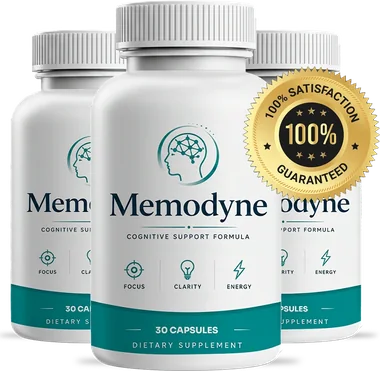
Ready to try Memodyne?6 bottles $294 ($49 each) · 60-day refund window · free U.S. shipping on 3 or 6
Order nowThis label
What is known, and not known, about the Memodyne ingredients?
Plenty is known about each ingredient alone, and next to nothing about memory.
| Ingredient | Per capsule | What research covers |
|---|---|---|
| L-arginine, 2 forms | 400 mg | Roughly a fifth of the smallest exercise dose (NIH ODS, Exercise supplements); Mayo lists heart and vessel uses but nothing for memory (Mayo Clinic, L-arginine) |
| L-citrulline, 2 forms | 200 mg | A small slice of the 3-8 g tested; support for workouts is weak (NIH ODS, Exercise supplements) |
| Beta-alanine | 40 mg | About one-fortieth of the smallest dose tested, for intense exercise (NIH ODS, Exercise supplements) |
| Niacin | 7.5 mg NE | Memory loss occurs in pellagra, a severe shortage; extra niacin helps memory only then (NIH ODS, Niacin) |
Safety side
Does a blood-flow claim come with any safety questions?
Yes. Something that relaxes blood vessels may also drop blood pressure. Mayo Clinic says L-arginine taken with blood pressure pills, nitrates or sildenafil can push pressure too low (Mayo Clinic, L-arginine).
Poor memory can come from treatable problems, such as depression, a medicine reaction or a thyroid disorder. See your provider first rather than waiting on a capsule (NCCIH, Supplements for cognition). The memory health guide lists the signs worth a call.
Quick filter
Which three questions test any brain claim on a supplement?
Who was studied?
People, animals or cells in a dish?
At what dose?
Does one serving come close to the studied amount?
What was measured?
A body process, or memory you would notice?
Bottom line
So what do these claims tell you about Memodyne?
They show which processes the seller has in mind, not what the capsule does. In fairness, the label prints every amount, so anyone can hold it up against the research. See Memodyne benefits for a claim-by-claim score.
Sources
- Dietary Supplements for Exercise and Athletic Performance: Fact Sheet for Health Professionals. NIH Office of Dietary Supplements, 2026.Arginine 2-20 g a day had little to no effect on performance and typically no effect on nitric oxide or blood flow; up to 9 g a day for weeks is well tolerated; 9-30 g causes stomach upset and slightly lower blood pressure. Citrulline studied at 3-8 g; support is weak; safety over months not well assessed. Beta-alanine 1.6-6.4 g a day appears safe for up to 8 weeks; 800 mg or more in one dose can cause harmless tingling for 60-90 minutes.
- L-arginine. Mayo Clinic, 2026.Studied for angina, high blood pressure, erectile dysfunction and peripheral artery disease (no memory use listed). Generally safe orally; nausea, cramps, diarrhea, bloating, gout, allergy, worse asthma. Not recommended after a recent heart attack. Interactions: blood pressure drugs, nitrates, sildenafil, blood thinners, diabetes drugs, potassium-sparing diuretics, isoproterenol.
- Health Products Compliance Guidance. Federal Trade Commission, 2022.Health claims need competent and reliable scientific evidence; testimonials cannot replace it.
FAQ
Brain claim words: common questions
What is oxidative stress in simple terms?
It is wear on cells from free radicals, unstable oxygen molecules made as cells burn fuel. Antioxidant defenses usually keep them in check, and harm builds when radicals outpace them. None of our sources show Memodyne changing this in people.
What do neurotransmitters have to do with memory?
They are the chemical messengers between nerve cells, and learning relies on that signaling. The body keeps their levels in balance on its own. No study shows Memodyne's amino acids changing neurotransmitter levels, or memory, in people.
Can a supplement increase blood flow to the brain?
Our sources do not show this for Memodyne's ingredients. Arginine is the usual candidate, yet several grams a day mostly failed to change circulation in athletes (NIH ODS, Exercise supplements). A Memodyne capsule holds 400 mg of arginine ingredients.
Does Memodyne protect brain cells from oxidative stress?
That is a sales-page claim, not a finding. No trial has tested the Memodyne formula, and none of our sources show arginine, citrulline or beta-alanine lowering oxidative stress in the human brain.
What is a structure-function claim on a supplement?
It is a statement that a product supports a normal body function, such as "supports cognitive health". Supplements may use them with the FDA statement on the label. The FDA does not review them first (FDA, Supplement Q&A), and the FTC still expects solid evidence (FTC, Health claims).
Why can't supplements claim to treat Alzheimer's?
Treating a disease is a drug claim, and drugs must show safety and benefit before sale. In 2019 federal regulators sent letters to supplement firms over Alzheimer's and dementia promises (FTC, Alzheimer's claims letters). Memodyne's bottle makes no disease claim.
Who wrote this
Written and reviewed by
Plain-language pages built from the label, the sales page and linked public health sources.
Last updated . Read our editorial standards and how we check reviews. This website is run by a USA authorized retailer that sells Memodyne, not by the maker (the label says distributed by Gex Corporation LLP, Ogden, UT). We earn money when you buy through our order links.
Keep reading
More about Memodyne

How it works
The nitric oxide and blood flow idea behind Memodyne, set next to what NIH research found and what nobody has tested.
Read more
Benefits
Each Memodyne claim, from memory to cerebral blood flow, sorted into what a source supports and what nobody has shown.
Read more
Memory health guide
Typical memory slips versus warning signs, the treatable causes doctors look for, and how to get ready for a memory checkup.
Read moreUSA Authorized Memodyne Retailer
Ready to try Memodyne?
The sales page offers 2, 3 or 6 bottles. Six bottles cost $49 each, and 3 or 6 ship free in the U.S.
- Secure checkout
- 60-day window
- Ships from the U.S. with tracking